
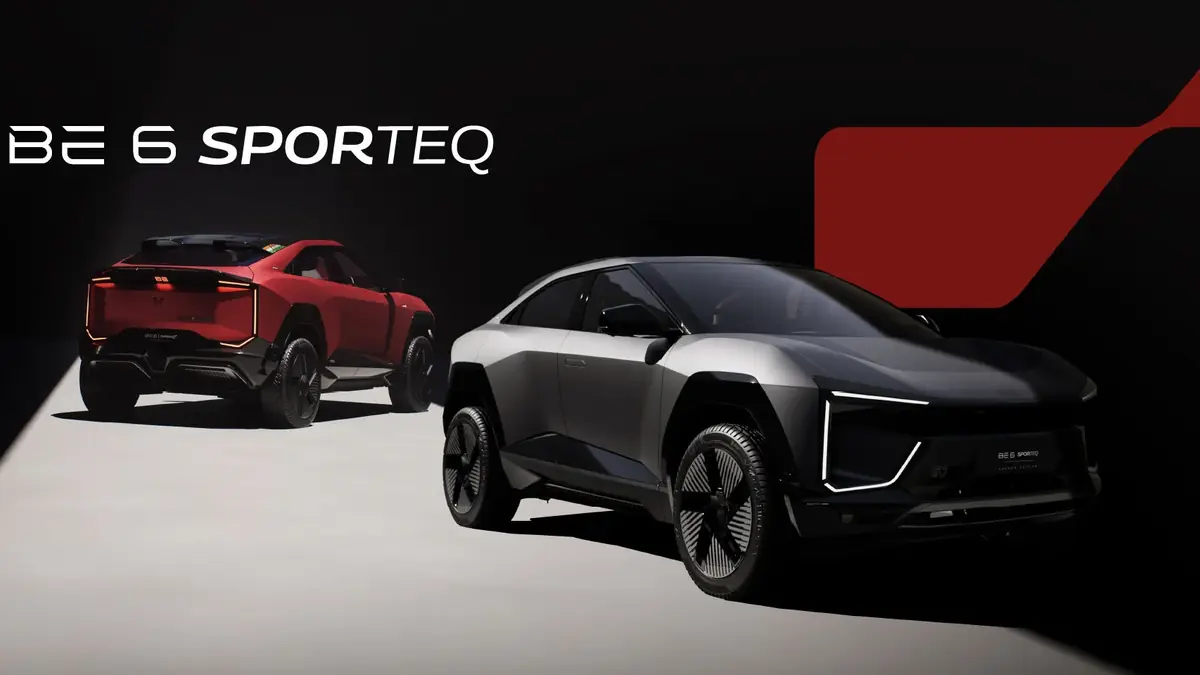
Key takeaways
- The BE 6 SPORTEQ comes with 59, 70 or 79 kWh packs, rear-wheel drive and a single motor rated 170, 180 or 210 kW with 360 Nm of torque.
- Mahindra lists MIDC P1+P2 ranges of 573, 652 and 708 km. Derived battery-side consumption is about 103, 107 and 112 Wh/km, so the bigger packs are not noticeably less efficient.
- DC 20–80% is listed at 20 minutes for all three packs, but with different charger inputs (140, 160 and 180 kW, all at 400 A). The implied average power into the pack is about 106, 126 and 142 kW (derived).
- New on the SPORTEQ: Drift Mode (ESP off, for controlled environments only), Revive and Revive SOS (a little extra range at 0%), a Charge Scheduler and updated infotainment.
Published specifications
| Specification | 59 kWh | 70 kWh | 79 kWh |
|---|---|---|---|
| Motor power | 170 kW | 180 kW | 210 kW |
| Maximum torque | 360 Nm | ||
| Drive | Rear-wheel drive | ||
| MIDC P1+P2 range | 573 km | 652 km | 708 km |
| DC charging 20–80% | 20 min (140 kW, 400 A) | 20 min (160 kW, 400 A) | 20 min (180 kW, 400 A) |
| AC 0–100% (11.2 / 7.2 kW charger) | 6 / 8.7 h | 7 / 10.2 h | 8 / 11.7 h |
Other published figures: length × width × height 4,371 × 1,907 × 1,627 mm; wheelbase 2,775 mm; unladen ground clearance 207 mm (222 mm at the battery); turning circle 10 m; boot 455 L and frunk 45 L. Drive modes are Default, Range, Everyday, Race, Custom and Snow, and regeneration offers levels L0 to L3 (with an Auto level on higher variants) plus single-pedal driving. Portable AC charging is up to 3.2 kW from a 16 A socket. Variant names (ONE, TWO, THREE, THREE+, FOUR, Launch Edition) differ in the packs and features offered, so check the exact variant.
Technical interpretation
Derived efficiency
| Pack | Range (MIDC) | Derived Wh/km |
|---|---|---|
| 59 kWh | 573 km | ≈103 |
| 70 kWh | 652 km | ≈107 |
| 79 kWh | 708 km | ≈112 |
The smaller pack scores best because it carries less weight, and the more powerful motor of the larger pack costs a little efficiency in the test cycle. These are laboratory figures that use nominal capacity; Mahindra itself describes “500+ km real-world range” for the 79 kWh car in metro driving with the air-conditioning on, which is about 70% of 708 km.
Why the charge times look the same
All three packs are listed at 20 minutes for 20–80%, yet the 20–80% window is a different amount of energy in each: 35.4 kWh (59 kWh pack), 42 kWh (70 kWh) and 47.4 kWh (79 kWh). Completing each in 20 minutes needs average powers of about 106, 126 and 142 kW into the battery (derived). That is why Mahindra quotes a higher charger input for the larger packs. A charger that cannot supply that input, or cold weather, will lengthen the stop.
AC charging reality check
The 79 kWh pack takes 8 hours on the 11.2 kW wall charger, an implied average of about 9.9 kW into the pack; on the 7.2 kW charger 11.7 hours implies about 6.8 kW (both derived). The wall charger is optional equipment, and the portable 3.2 kW unit is far slower, so confirm what is supplied with the variant and what your home supply can support.
Revive and Drift Mode
Revive and Revive SOS are described as giving additional range at 0% charge so that you can reach the nearest charger; Revive SOS is for emergencies and Mahindra states it can be used five times over the vehicle’s lifetime. Mahindra is explicit that it is not a substitute for charging. Drift Mode disables the electronic stability programme to allow controlled drifting; Mahindra says it is for controlled driving environments only. In practice, turning off stability control removes a major safety net, so it is not something to use on public roads.
Mahindra’s sales milestone
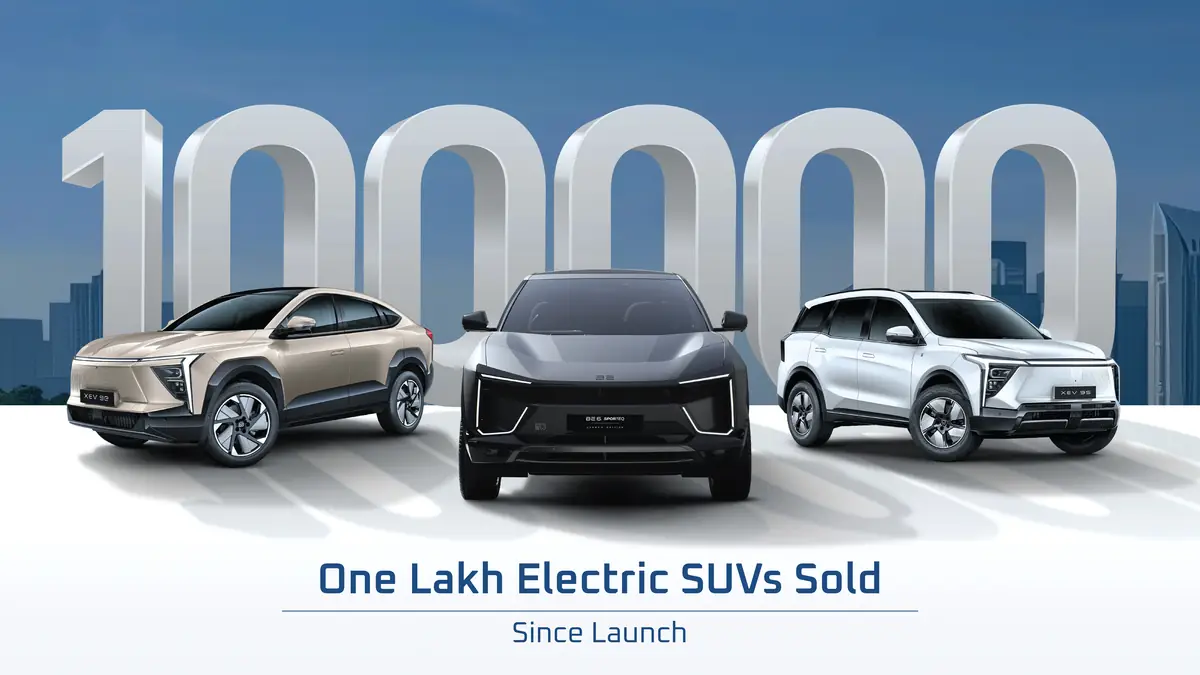
As per Mahindra, the INGLO “electric origin” architecture has been “proven over 80 crore km by 1,00,000+ proud owners”, with the figures given “as of Aug’26 for the Mahindra eSUV portfolio”. This is a manufacturer claim about the whole electric SUV range, not about the BE 6 SPORTEQ alone, and we have not independently verified it.
What to verify before buying
- Exact variant, pack size and whether the 11.2 kW wall charger and installation are included.
- Which features you need: several are limited to higher variants.
- Current price list and any subscription terms for connected-car services (Mahindra notes these may need registration and an active subscription).
- Warranty terms: as per Mahindra, a lifetime HV battery warranty for the first registered private owner, and 10 years or 2,00,000 km after a change of ownership.
Official sources
- Mahindra – official BE 6 SPORTEQ specifications, checked 27 November 2026
- Mahindra Electric SUVs – official website